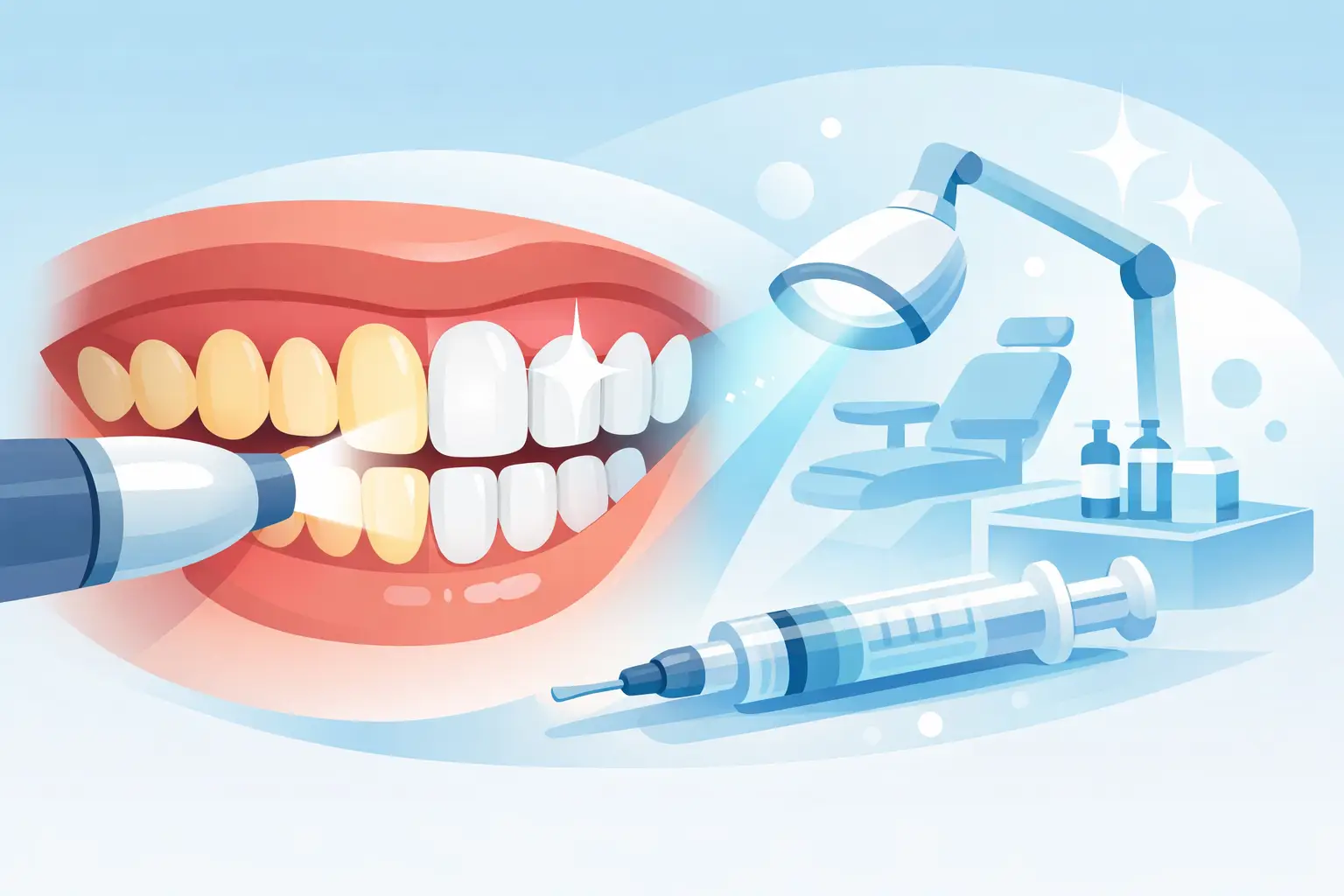
Coffee stains tend to creep up slowly. One day your smile looks normal in the mirror, and the next you are comparing it to old photos and wondering what changed. If you have been curious about how professional teeth whitening works, the short answer is that it uses carefully controlled whitening agents to break apart stain molecules inside the enamel, not just scrub the surface.
That sounds simple, but the details matter. The type of discoloration, the condition of your teeth, and the method used all affect how much brighter your smile can become and how comfortable the process feels. Professional whitening is popular because it is faster, more predictable, and more closely supervised than over-the-counter products.
How professional teeth whitening works inside the tooth
Teeth are not solid blocks of bright white material. Enamel, the outer layer, looks smooth but has microscopic pathways that allow whitening gel to move through it. Beneath the enamel is dentin, which naturally has a warmer, more yellow tone. Over time, pigments from food, drinks, tobacco, and normal aging can change the way teeth look.
Professional whitening usually relies on hydrogen peroxide or carbamide peroxide. These ingredients release oxygen molecules that travel into the tooth structure and break down the colored compounds responsible for staining. As those larger pigment molecules are altered, they reflect light differently, so the teeth appear lighter.
This is one reason whitening toothpaste has limits. Toothpaste can help remove some surface staining, which is useful, but it does not typically produce the same internal whitening effect as professional-grade peroxide formulas. If your discoloration has built up over years, a more active treatment is often needed to make a noticeable difference.
What stains respond best to whitening
Not every kind of discoloration behaves the same way. Yellow-toned staining from coffee, tea, red wine, tobacco, and aging often responds well to professional treatment. These are common cases where patients see visible improvement.
Brown stains may also improve, though sometimes they need more time or repeated treatment. Gray discoloration can be more stubborn, especially when it is tied to certain medications or deeper changes within the tooth. Whitening can still help in some cases, but results are less predictable.
It also helps to know that dental work does not whiten the way natural teeth do. Crowns, veneers, bonding, and tooth-colored fillings keep their original shade. If you whiten your natural teeth, older restorations in visible areas may no longer match. That does not mean whitening is a poor choice. It just means treatment planning matters.
In-office whitening versus take-home whitening
The two main professional options are in-office whitening and custom take-home trays. Both use professional-strength materials, but they work a little differently.
In-office treatment
In-office whitening is designed for speed and close supervision. Your dental team starts by checking your teeth and gums to make sure whitening is appropriate. Then the gums and other soft tissues are protected, and whitening gel is applied to the teeth. Depending on the system used, the gel may be refreshed in cycles during the appointment.
Some systems use a special light, while others do not. The light itself is not what whitens the teeth. The active ingredient in the gel does the real work. In some setups, the light may help support the process or improve efficiency, but it is not the main reason teeth become lighter.
The biggest benefit of in-office treatment is convenience. Many patients want visible results without waiting weeks to see a change. It can be a strong option before a wedding, graduation, job interview, or other event where timing matters.
Custom take-home trays
Take-home whitening from a dental office is different from one-size-fits-all kits sold in stores. Custom trays are made to fit your teeth more precisely, which helps the gel stay where it should and reduces the chance of irritating the gums.
You wear the trays for a prescribed amount of time over several days or weeks, depending on the product and your goals. This approach gives you more control over the pace of whitening. It can also be a good choice for patients with mild sensitivity, since the process is more gradual.
For some people, take-home trays are the better value because they can also be used later for touch-ups under professional guidance. In other cases, patients prefer to start with in-office treatment and maintain the result with trays afterward.
Why a dental exam comes first
Whitening works best when the mouth is healthy. Cavities, leaking fillings, exposed roots, gum inflammation, and heavy tartar buildup can all affect comfort and results. That is why a dental exam is not just a formality before cosmetic treatment.
A professional evaluation helps identify whether the staining is actually stain or something else, such as enamel wear, internal tooth darkening after trauma, or a restoration mismatch. It also helps your dentist determine whether a cleaning should come first. If plaque and tartar are covering parts of the teeth, whitening may look uneven.
This step is especially helpful for patients who have not had a checkup in a while. Sometimes the best cosmetic result starts with basic preventive care.
What whitening feels like and why sensitivity happens
A common question is whether professional whitening hurts. Most patients do well, but temporary sensitivity is possible. You may notice brief zingers with cold air, cold drinks, or sweet foods during or shortly after treatment.
This happens because whitening agents move through the enamel and can temporarily affect the nerve inside the tooth. The sensation usually fades, and there are ways to reduce it. Dentists may recommend a lower concentration, shorter wear times, desensitizing products, or spacing treatments out more gradually.
Gum irritation can also happen if whitening gel contacts soft tissue, which is another reason supervision and proper tray fit matter. Professional treatment does not eliminate every side effect, but it greatly improves the chances of a safer, more comfortable experience.
How white can teeth actually get?
Whitening can make teeth noticeably brighter, but it does not turn every smile paper-white. Natural teeth vary in structure and underlying shade, and those differences affect the final result. Marketing images often create unrealistic expectations.
Most patients are happiest when the goal is a fresher, cleaner, more youthful look rather than an artificial white. The best result is one that fits your features and still looks natural. A dentist can help you choose the approach that balances brightness with realism.
It is also worth knowing that whitening is not permanent. Teeth are exposed to staining foods, drinks, and normal aging every day. Some people keep their results for quite a while, while others notice fading sooner, especially if they drink coffee, tea, or red wine often or use tobacco products.
How to make results last longer
Professional whitening gives you a stronger starting point, but maintenance matters. Good brushing and flossing help reduce new surface stains. Regular cleanings also help preserve the brighter look by removing buildup before it becomes more noticeable.
Food and drink choices play a role too. You do not have to avoid coffee forever, but habits make a difference. Rinsing with water after dark beverages, using a straw when it makes sense, and avoiding tobacco can all help extend your results.
For many patients, occasional touch-ups are part of the plan. That does not mean the first treatment failed. It simply reflects that whitening, like hair color or skin care, often needs maintenance over time.
Who should be cautious about whitening
Professional whitening is safe for many adults, but it is not ideal for everyone. Patients with untreated decay or gum disease should address those issues first. Pregnant patients may choose to postpone elective cosmetic treatment. Younger patients need individual evaluation, since age and dental development matter.
There are also cases where whitening is not the best answer to the cosmetic concern. If the real issue is enamel loss, patchy white spots, significant internal discoloration, or old visible dental work, another option may create a better and more even result. Sometimes bonding or veneers are considered instead. It depends on what is causing the color change.
That is one reason many patients appreciate a full-service office. If whitening is a good fit, great. If another cosmetic or restorative option would serve you better, you can talk through that plan without guessing.
Is professional whitening worth it?
For patients who want visible change, professional whitening is often worth it because it is tailored, supervised, and more predictable than store-bought alternatives. You are not just buying a product. You are getting an assessment of what your teeth can realistically achieve and a plan built around your comfort and goals.
At Bountiful Dentistry, that kind of guidance matters because cosmetic care should support your overall oral health, not work around it. A brighter smile tends to feel best when it comes from treatment that is both effective and appropriate for your teeth.
If you have been thinking about whitening, the most useful next step is not choosing the strongest gel. It is finding out what kind of staining you have and what approach gives you the best chance of a healthy, natural-looking result.