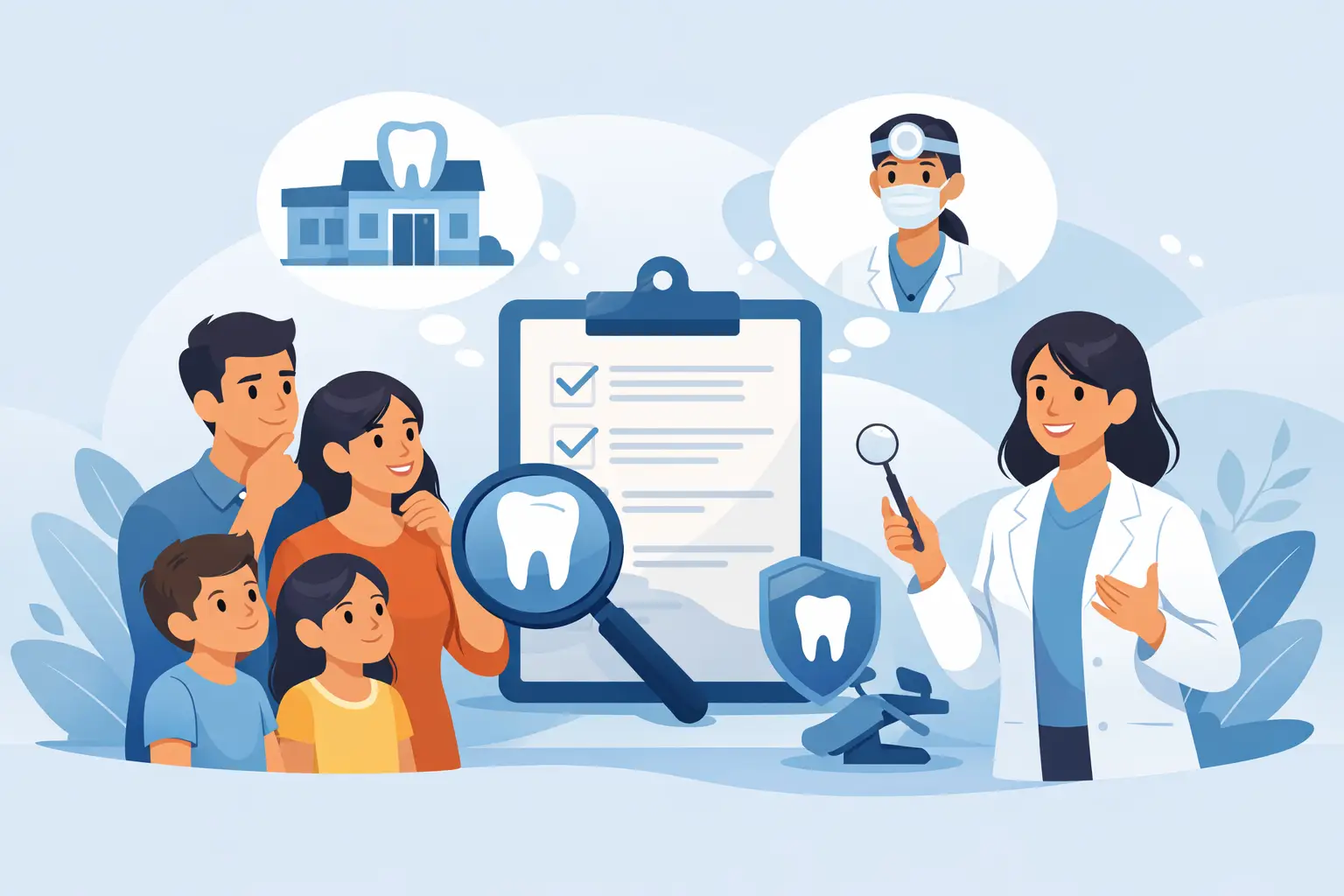
When you are trying to figure out how to choose family dentist care, the hardest part is not usually finding a long list of offices. It is narrowing that list down to one practice you will trust with your child’s first cleaning, your own routine exams, and the more complex needs that can come up over time. A good family dentist should make life easier, not give you one more thing to manage.
That matters because family dentistry is rarely just about checkups. Over the years, your household may need preventive care, fillings, cosmetic improvements, orthodontic guidance, or restorative treatment after injury or tooth loss. Choosing well at the start can save time, reduce stress, and help your family build a lasting relationship with a team that knows your health history.
How to choose family dentist care for the long term
The best place to start is with your real-life needs, not a generic checklist. A young family with small children may care most about a calm environment, flexible scheduling, and a dentist who is comfortable treating kids and adults in the same office. A household with teens may also want orthodontic evaluations. Adults may be thinking about whitening, crowns, implants, or replacing old dental work.
That is why convenience alone is not enough. An office close to home is helpful, but it should also be able to meet a wide range of needs. If a practice handles preventive care well but sends you somewhere else for every restorative or cosmetic concern, the experience can become fragmented. On the other hand, a broad-service office can offer continuity. Your family stays with one team, and treatment decisions are easier to coordinate.
There is some balance here. A smaller office may feel very personal and still be an excellent fit if your needs are straightforward. But if you want one dental home that can support your family through different stages of life, a comprehensive practice often has an advantage.
Look for a dentist who treats more than one age group well
Not every dentist who accepts children is truly set up for family care. A strong family practice understands how needs change from preschool to retirement. That includes preventive visits for children, cavity treatment for school-age patients, bite and alignment monitoring for teens, and restorative solutions for adults.
Pay attention to how the office describes its approach. Do they talk clearly about serving families, or is family care just a side note? The answer can tell you whether they are structured around long-term household care or mostly focused on a narrower type of treatment.
This also applies to communication style. Parents need clear explanations. Teenagers often respond better when they are addressed directly, not spoken around. Adults usually want practical options, costs, and expected outcomes without confusion or pressure. A good family dentist adjusts the conversation to the person in the chair while keeping the overall experience welcoming.
Services matter more than many people realize
One of the smartest ways to evaluate how to choose family dentist options is to think a few years ahead. If your family only needs cleanings today, that may not be true next year.
A well-rounded practice should offer a strong preventive foundation, including exams, cleanings, X-rays, and basic restorative care. Beyond that, it helps if the office can also support more advanced needs such as crowns, cosmetic improvements, implants, or orthodontic care. You may not need every service now, but having access to them in one place can be a major benefit later.
This does not mean every patient should pick the office with the longest menu of treatments. It means you should choose a practice that fits the level of care your family is likely to need. For many households, the right answer is a dental office that can handle both routine care and more involved treatment without sending you in several directions.
In communities across Northern Utah, that kind of continuity can make scheduling and treatment planning much simpler for busy families.
Comfort and trust should be obvious from the first contact
Dental anxiety is not limited to children. Many adults delay care because they have had a bad experience in the past, feel embarrassed about their teeth, or worry they will be judged. Children often pick up on that tension quickly.
A dependable family dentist creates a different experience. The front desk should be respectful and organized. The team should answer questions clearly. The dentist should explain findings in plain language and discuss next steps without rushing. You should feel informed, not pushed.
This is where first impressions matter. A clean office and modern equipment are useful signs, but the bigger question is how the team treats people. If the staff seems impatient, dismissive, or overly sales-focused, that usually does not improve after you become a patient.
Trust also builds through consistency. Families often do best with a practice that values preventive care, explains treatment recommendations honestly, and helps patients make decisions based on need, timing, and budget.
Ask practical questions before you commit
You do not need to interrogate a dental office, but a short conversation can reveal a lot. Ask whether they routinely see both children and adults. Ask what services are handled in-house. Ask how they manage urgent issues such as a broken tooth, swelling, or sudden pain.
It is also reasonable to ask about scheduling. Can family members book on the same day? How far out are routine appointments? Do they offer early morning or other convenient times? For working parents, those details can matter as much as the treatment itself.
Insurance and payment should be part of the discussion too. The cheapest option is not always the best value, but costs should be explained clearly. A good office will help you understand coverage, out-of-pocket expectations, and treatment priorities if a larger procedure is needed.
Reviews help, but they are not the whole story
Online reviews can be useful when you read them with some perspective. Look for patterns instead of focusing on one glowing comment or one unhappy post. If many patients mention that the office is kind, punctual, thorough, and good with kids, that is meaningful. If several people mention billing confusion or feeling rushed, that also tells you something.
Still, reviews are only one piece of the decision. Some excellent dental practices have fewer reviews simply because their patients are busy and not inclined to post online. Others may have strong ratings but not be the best match for your family’s priorities.
Use reviews to form questions, not just conclusions. If people consistently praise a practice for comprehensive care or a welcoming environment, ask about those qualities directly when you call.
Watch for signs of a long-term dental home
A true family dentist is not just there to fix today’s problem. The goal is ongoing care that supports oral health over time. That means tracking changes, catching issues early, and understanding your family’s history and preferences.
You can often sense this approach in how an office handles treatment planning. Do they explain what needs attention now, what can be monitored, and what may become important later? Do they help you prioritize rather than overwhelm you? That kind of guidance is especially valuable for families managing multiple appointments and different treatment needs.
For many patients, the best choice is a practice that combines preventive care with the ability to support smile goals and restorative needs as life changes. Offices like Bountiful Dentistry are built around that broader relationship, which can be reassuring for families who want consistency instead of starting over with a new provider every few years.
Red flags to take seriously
If an office is difficult to reach, vague about costs, or consistently rushed, do not ignore it. The same goes for a provider who does not listen, does not explain treatment clearly, or recommends extensive work without helping you understand why.
Another red flag is poor fit across age groups. A practice might be excellent for adults but not especially patient with young children. Or it may be fine for routine cleanings but not well equipped for restorative or cosmetic needs. That does not make it a bad office, but it may make it the wrong one for your household.
The right family dentist should feel capable, steady, and approachable. You should leave with more clarity than you had when you arrived.
Choosing a family dentist is really about choosing the kind of care experience you want your household to have year after year. If a practice offers the right mix of services, communicates well, respects your time, and makes each family member feel cared for, you are probably closer than you think to the right decision.