Losing teeth changes more than your smile. It affects how you eat, how clearly you speak, and sometimes how comfortable you feel in everyday conversations. When patients start comparing implants vs dentures, they are usually not looking for a sales pitch. They want a clear answer about what life will actually feel like after treatment.
The honest answer is that both options can restore your smile, but they do it in very different ways. The better choice depends on your health, your goals, your budget, and how much stability you want day to day. For some people, dentures are a practical and effective solution. For others, implants are worth the added investment because they feel closer to natural teeth.
Implants vs dentures: the basic difference
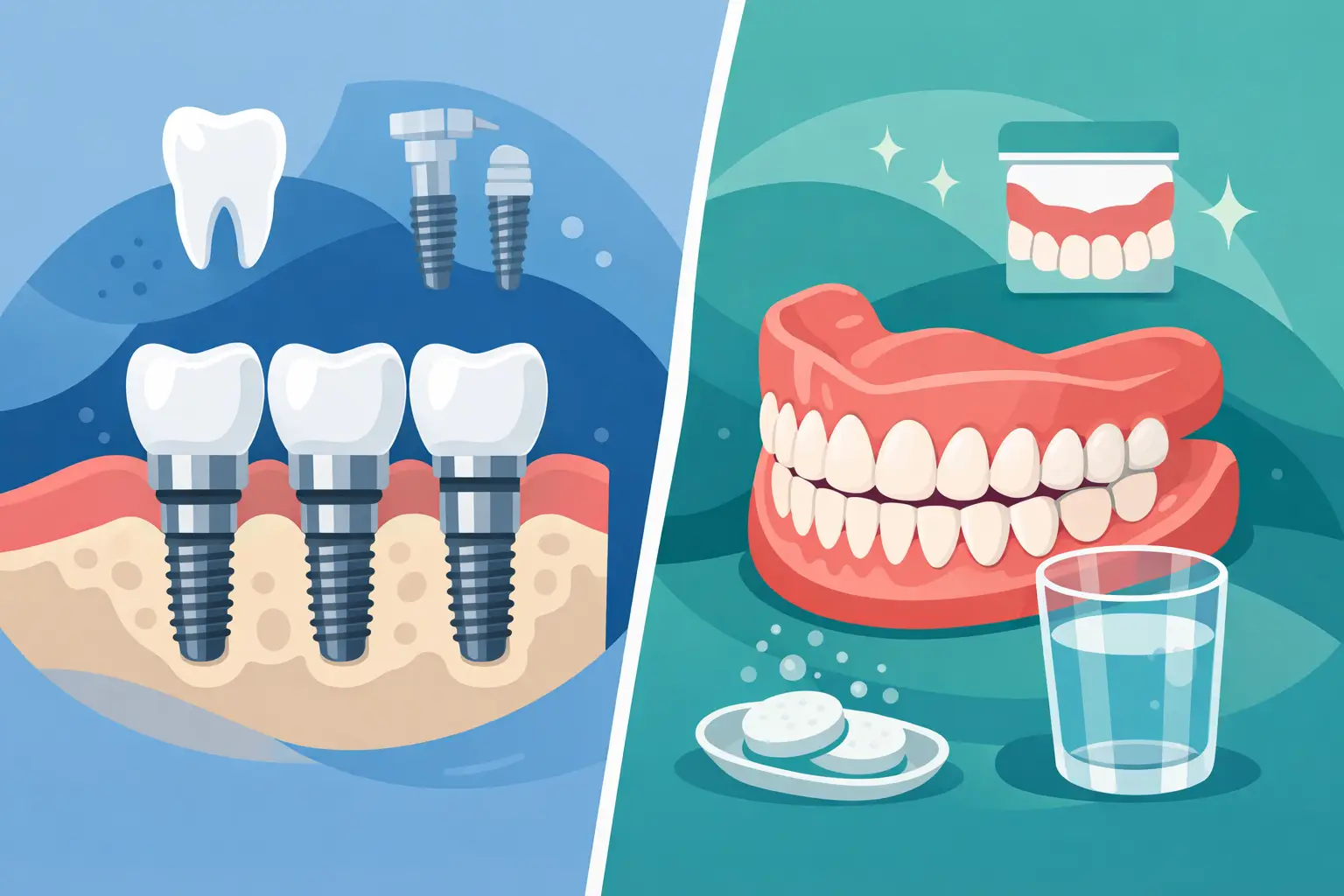
Dentures are removable appliances that replace missing teeth. They can replace a full arch of teeth or just several missing teeth, and they rest on the gums. Traditional dentures have been used for many years because they are widely accessible and can restore appearance and basic function relatively quickly.
Dental implants work differently. An implant is placed in the jawbone and acts like an artificial tooth root. That foundation can support a crown, a bridge, or even a full arch of replacement teeth. Because implants are anchored in bone, they tend to feel more secure than removable dentures.
That single difference affects nearly everything else, including comfort, chewing ability, bone health, cleaning, and cost over time.
How implants and dentures feel in daily life
The biggest day-to-day difference is stability. Dentures can move slightly when you talk or eat, especially if they have become loose over time. Some patients adjust well and do fine with them. Others find that slipping, sore spots, or the need for adhesive becomes frustrating.
Implants usually provide a firmer feel. Because they are anchored, they do not shift the same way removable dentures can. Many patients describe implant-supported teeth as feeling more natural when chewing and speaking. That added security can make a real difference if you enjoy foods with more texture or if you simply do not want to think about your teeth moving during the day.
Comfort matters too. Dentures sit on top of gum tissue, which means pressure is placed on the gums during chewing. Implants transfer force more like natural tooth roots, through the jawbone. That can make biting feel stronger and more balanced.
Still, there is some nuance here. A well-made denture can be comfortable, especially when it fits properly and is adjusted as needed. And not every patient needs the maximum level of retention that implants provide. The right question is not which option sounds more advanced. It is which option fits your daily needs.
Appearance and confidence
Both dentures and implants can improve the look of your smile. Modern dentures are more natural-looking than many people expect, and they can support facial appearance by replacing missing teeth. If someone has been living with extensive tooth loss, dentures can provide a dramatic improvement.
Implants often have an edge in how natural they feel and function. They can also help preserve the jawbone, which supports facial structure over time. When bone shrinks after tooth loss, it can contribute to a more sunken appearance around the mouth and lower face. Since implants stimulate the bone, they can help reduce that gradual change.
For patients who are focused on both confidence and long-term facial support, that can be an important factor.
Cost now versus value over time
This is often where the decision becomes more personal. Dentures usually have a lower upfront cost. For patients who need to replace many teeth and need a more budget-conscious path, dentures may be the most realistic option.
Implants generally cost more at the start because they involve surgery, healing time, and custom restoration. But lower initial cost does not always mean lower long-term cost. Dentures may need relining, adjustments, repairs, or replacement as the mouth changes. Over the years, those ongoing needs can add up.
Implants can also require maintenance, but they are typically designed as a longer-term solution. If a patient is healthy enough for treatment and wants the most stable option available, the higher initial investment may make sense.
There is no universal right answer here. Some patients need a solution that works within a current budget. Others are thinking in terms of long-term durability and convenience. A good treatment conversation should make room for both priorities.
Bone loss is one of the biggest differences
One issue many patients do not realize is what happens in the jaw after teeth are lost. Natural tooth roots help stimulate the bone. Once those roots are gone, the bone in that area begins to shrink.
Traditional dentures do not stop that process because they sit on the gums rather than in the bone. Over time, changes in the jaw can affect how the dentures fit. This is one reason some dentures become looser as the years go by.
Implants help preserve bone because they replace the root function as well as the visible tooth. That is one of the strongest clinical arguments in the implants vs dentures conversation. Bone support affects comfort, appearance, and the long-term stability of your restoration.
If a patient has already experienced bone loss, that does not automatically rule out implants. It may simply mean the treatment plan needs closer evaluation, and in some cases additional procedures may be recommended.
Cleaning and maintenance
Dentures require daily cleaning and should be removed for proper care. They need to be handled gently, cleaned thoroughly, and stored correctly when not in use. Some patients appreciate that this routine is straightforward. Others find the removable aspect inconvenient.
Implants are not maintenance-free, but they are cared for more like natural teeth. Brushing, flossing, and regular dental visits remain essential. Good home care matters because the gums and supporting bone around implants still need to stay healthy.
This can be an important lifestyle consideration. If you want a removable option that can be cleaned outside the mouth, dentures may appeal to you. If you prefer something that stays in place and fits into a more familiar oral hygiene routine, implants may feel like a better fit.
Who is a good candidate for each?
Dentures may be a strong choice for patients who need an efficient, cost-conscious way to replace multiple or all missing teeth. They can also be useful when medical factors, bone conditions, or personal preference make removable treatment the simpler route.
Implants may be a strong choice for patients who want the best possible stability, stronger chewing function, and support for long-term bone health. Adequate bone and healthy gums matter, although some patients who are not ideal candidates at first can still become candidates after additional treatment.
Age alone is not the deciding factor. Many adults assume implants are only for younger patients, but overall health and oral condition are usually more important than age by itself.
Implant-supported dentures can offer a middle ground
For some patients, the choice is not strictly one or the other. Implant-supported dentures combine features of both. A denture can be secured with implants, which often improves retention and comfort compared with a traditional removable denture.
This option can be appealing for patients who want more stability but may not need or want a separate implant for every missing tooth. It can also help people who are frustrated by loose lower dentures, which are often the hardest to keep stable.
A consultation can help determine whether this middle-ground option makes sense based on bone levels, goals, and budget.
How to decide between implants vs dentures
The best decision usually comes from balancing four things: function, comfort, long-term outlook, and cost. If your main priority is affordability and a faster path to replacing missing teeth, dentures may be the practical answer. If your priority is stability, a more natural feel, and preserving bone, implants may be the better long-term investment.
It also helps to think beyond the procedure itself. Ask yourself what matters most six months from now and five years from now. Do you want a removable option, or would that feel like a compromise? Are you comfortable with surgery if it means a more secure result? Does your current oral health support one choice more clearly than the other?
At a full-service office like Bountiful Dentistry, those questions can be reviewed in the context of your overall oral health, not just the missing teeth. That matters because the best replacement option should support how you eat, speak, clean your teeth, and maintain your smile over time.
If you are weighing implants and dentures, the most helpful next step is not guessing from general advice. It is getting a personalized evaluation that looks at your bone support, gum health, number of missing teeth, and goals for everyday life. The right solution is the one that feels sustainable, comfortable, and realistic for you.