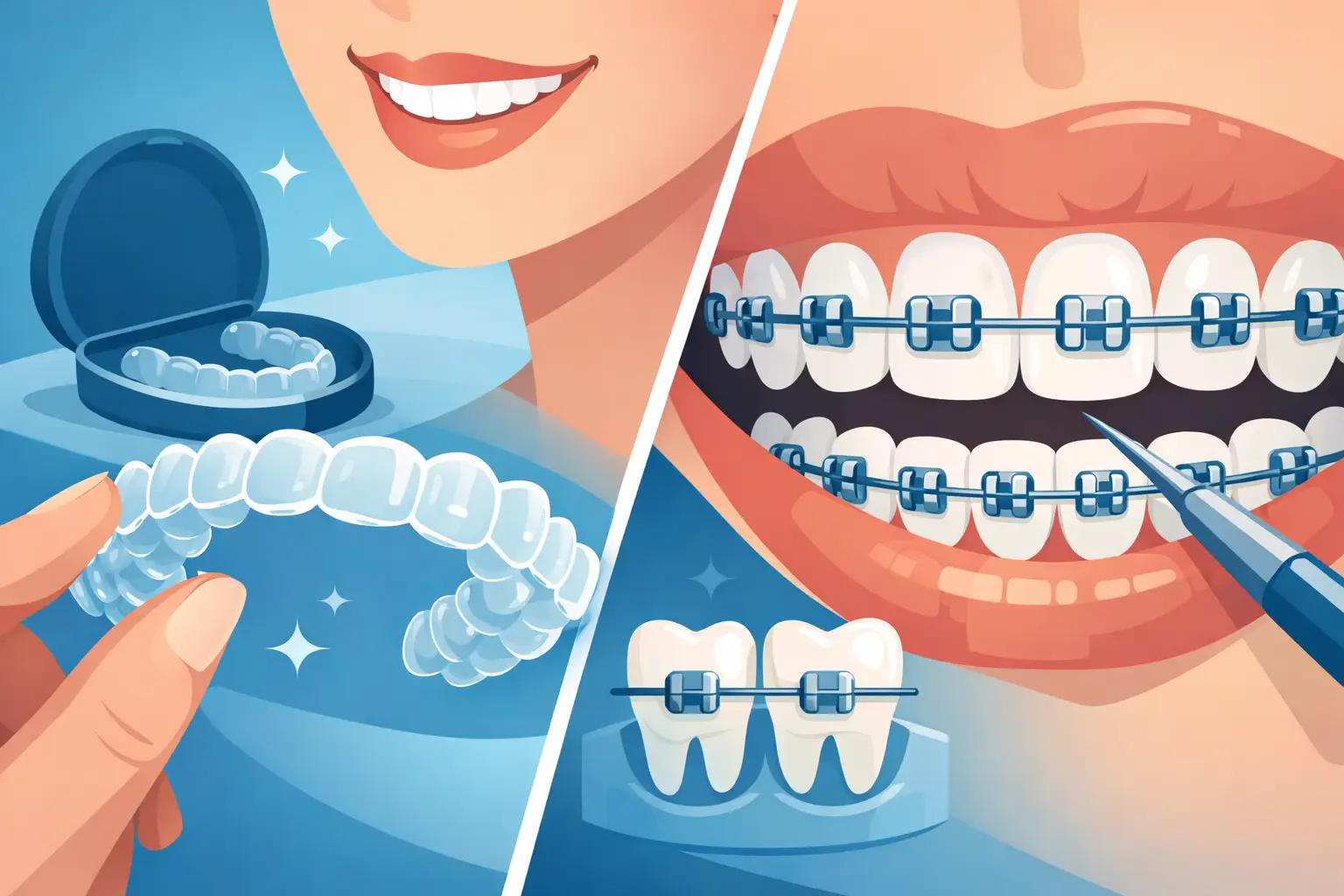
If you are weighing invisalign vs braces, you are probably not just asking which one straightens teeth. You are asking what will fit your schedule, your budget, your comfort level, and the way you want to look during treatment. That is the real decision, and it deserves more than a quick pros-and-cons list.
Both options can correct crowded teeth, gaps, and many bite problems. Both can lead to a healthier smile that is easier to clean and more comfortable to function with. But they work differently in daily life, and those differences matter a lot for teens, adults, and busy families across Northern Utah.
Invisalign vs braces: the biggest differences
Traditional braces use brackets and wires attached to the teeth to move them over time. Invisalign uses a series of clear, removable aligners that are custom made and changed out in stages. The goal is similar, but the experience is not.
Braces stay on around the clock. That gives them an advantage when it comes to consistency, because the treatment is always working whether the patient remembers it or not. Invisalign depends on wearing the aligners as directed, usually 20 to 22 hours a day. If they spend too much time out, treatment can slow down or become less predictable.
Appearance is the difference most people notice first. Invisalign is much less visible, which is a major reason adults and older teens often ask about it. Braces are more noticeable, though many patients become less self-conscious about them after the first few weeks.
Comfort and convenience are also different. Braces can irritate the cheeks and lips, especially after adjustments. Invisalign trays can create pressure when a new set starts, but they usually feel smoother. On the other hand, removing aligners before every meal and snack takes discipline that braces do not require.
When Invisalign may be the better choice
Invisalign appeals to patients who want a lower-profile orthodontic option. If you have work meetings, social events, or simply prefer a more discreet treatment, clear aligners can make the process feel easier to manage.
They also make eating simpler. Since the aligners come out, you can continue enjoying foods that are harder to manage with braces. There is no need to avoid popcorn, chewy bread, nuts, or crunchy vegetables for fear of breaking a bracket. For many adults, that alone makes Invisalign feel more practical.
Oral hygiene is another advantage. Brushing and flossing are more straightforward when you can remove the trays. That can be helpful for patients who want to protect their gum health throughout treatment or who already know they do not love flossing around wires.
Invisalign can be a very effective option for mild to moderate crowding, spacing, and some bite corrections. It is also a strong fit for responsible teens and adults who are likely to follow instructions closely. If you are organized and consistent, removable aligners can offer both flexibility and strong results.
When braces may be the better choice
Braces are still the best answer for many patients, and not because they are old-fashioned. They are reliable, efficient, and often better suited for more complex tooth movement.
If teeth need significant rotation, vertical movement, or major bite correction, braces may give your dentist or orthodontic provider more control. They can also be a good choice for younger patients who are not likely to keep aligners in for the recommended number of hours each day.
Braces remove some of the decision-making from treatment. You do not have to remember to put them back in after lunch. You do not have to keep track of trays. For many parents, that predictability is reassuring. For some teens, it can mean fewer opportunities for treatment delays.
Cost can also play a role. While pricing varies by case, traditional braces are sometimes more affordable than Invisalign. The exact difference depends on treatment complexity, length of care, and the type of braces or aligner system recommended.
Comfort, speech, and daily routine
Most patients want to know what life actually feels like during treatment. That answer depends on your habits as much as the appliance itself.
With braces, there is an adjustment period. Teeth can feel sore after placement and after wire changes. Brackets may rub against the inside of the mouth until the cheeks adapt. Eating softer foods often helps in the beginning.
With Invisalign, the pressure tends to come in waves as you switch to a new set of trays. Some patients notice a temporary lisp at first, though speech usually improves quickly. The bigger lifestyle adjustment is the routine - taking aligners out before eating, cleaning them, brushing before putting them back in, and staying on schedule every day.
Neither option is completely effortless. Braces ask for patience. Invisalign asks for consistency. The better choice is often the one that fits your personality and routine well enough that you can stick with it.
Which works faster?
Patients often hope one option is clearly faster, but treatment time depends more on the complexity of the case and how well the plan is followed than on the name of the appliance.
Some Invisalign cases move efficiently, especially when the corrections are moderate and the patient wears aligners exactly as instructed. Braces can also move teeth very effectively, particularly in complex cases where continuous control matters. If Invisalign is not worn enough, braces may actually finish faster simply because they are always active.
That is why a personalized exam matters. A treatment plan should be based on your bite, tooth position, goals, and expected compliance, not just what looks more appealing online.
Invisalign vs braces for teens and adults
Adults often lean toward Invisalign because it is discreet and easier to fit into professional and social settings. They may also appreciate being able to remove aligners for photos, presentations, or special occasions. Still, adults with more complex orthodontic needs may be better served by braces, or by a treatment plan that blends esthetics with efficiency in a practical way.
For teens, the choice is more individual. Some do great with clear aligners and like the appearance and flexibility. Others benefit from braces because they do not have to manage removable trays at school, during sports, or when eating with friends. There is no one-size-fits-all answer.
Parents should also think beyond appearance. The best treatment is the one a teen will actually follow through with from start to finish.
Cost and long-term value
It is reasonable to ask about cost, but value matters just as much. The lower-priced option is not automatically the better investment if it does not fit the patient well or leads to delays, repairs, or inconsistent wear.
Orthodontic treatment is about more than a straighter look. Proper alignment can make teeth easier to clean, reduce uneven wear, and improve bite function. Those benefits can support long-term oral health for both teens and adults.
When comparing estimates, ask what is included in the treatment fee, how follow-up visits work, and what retainers may cost afterward. The right plan should feel clear, realistic, and tailored to your needs.
How to decide with confidence
The best way to choose between Invisalign and braces is to match the treatment to the person, not just the problem. If you want a discreet option and know you can wear aligners faithfully, Invisalign may be an excellent fit. If your case is more complex, or if you would rather not rely on daily compliance, braces may be the smarter path.
A comprehensive dental office can be especially helpful here because orthodontic treatment does not happen in a vacuum. Your gum health, existing dental work, bite function, and long-term smile goals all matter. At Bountiful Dentistry, that broader view helps patients and families make informed choices that support both appearance and overall oral health.
The right orthodontic treatment should feel workable from day one. Not perfect, not trendy, and not based on someone else’s smile. Just a clear plan that fits your life and moves you toward a healthier, more confident one.