A lot of people ask about Invisalign after years of putting off orthodontic treatment. Some never had braces as kids. Others had straight teeth once, then watched them slowly shift over time. If you want a more even smile without metal brackets, Invisalign can be a practical option that fits adult life, work schedules, and family routines.
Clear aligners appeal to patients for a simple reason - they are discreet. But appearance is only part of the story. Orthodontic treatment is about more than cosmetics. When teeth are crowded, spaced, or out of alignment, it can affect how you bite, how easy your teeth are to clean, and how confident you feel when you smile. Invisalign is designed to improve those concerns with a series of custom trays that gradually move teeth into better positions.
How Invisalign works
Invisalign uses clear plastic aligners made specifically for your teeth. Each set is shaped a little differently from the one before it, which allows movement to happen in small, controlled steps. You wear the aligners most of the day, take them out for meals and brushing, and switch to the next set on a schedule recommended by your dentist.
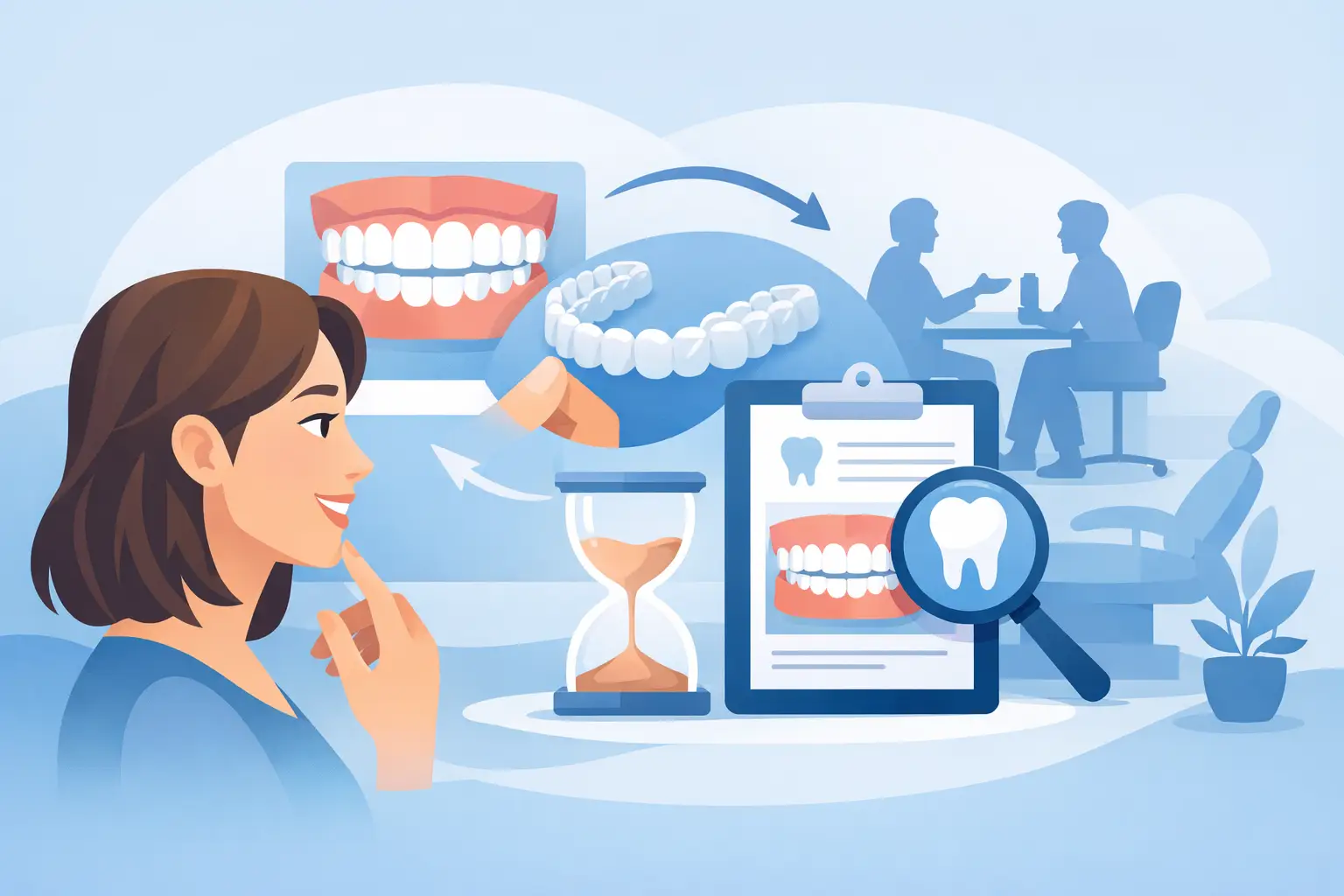
Treatment usually starts with a consultation and digital planning. Your dentist examines your teeth, bite, and overall oral health to see whether clear aligners are a good match for your goals. Imaging or digital scans are used to map out tooth movement, and from there a custom series of aligners is created.
That planning matters. Clear aligners are not just generic trays. Each stage is built around the way your teeth need to move over time. Some patients also need small tooth-colored attachments placed on certain teeth to help guide more precise movement. These attachments are subtle, but they can make a big difference in treatment success.
Who is a good candidate for Invisalign?
Invisalign works well for many teens and adults, especially people with mild to moderate alignment issues. It is often used to address crowding, gaps, minor bite concerns, and relapse after previous orthodontic treatment. For patients who want a lower-profile alternative to traditional braces, it can be an appealing choice.
Still, not every case is the same. Some complex bite problems or major tooth movements may be better treated with braces or with a broader orthodontic plan. That does not mean Invisalign is limited to only small cosmetic changes. It simply means the right treatment depends on your specific teeth, jaw relationship, and goals.
This is where a professional evaluation matters. A good consultation should cover what Invisalign can realistically accomplish, how long treatment may take, and whether another option would produce a better result. Straight answers are important, especially when your time and budget are involved.
Why many adults prefer Invisalign
For adults balancing work, parenting, and busy schedules, convenience is a major factor. Invisalign aligners are removable, which makes eating easier than with braces. There are no food restrictions because you take the trays out before meals. Brushing and flossing are also more straightforward, since you are cleaning your natural teeth without wires in the way.
Appearance is another reason many patients choose clear aligners. If you speak with clients, attend meetings, or simply do not want orthodontic treatment to stand out, Invisalign offers a less noticeable approach. Most people will not see the aligners unless they are looking closely.
Comfort can also be better for some patients. You may still feel pressure when switching to a new set of aligners, which is normal, but there are no metal brackets or wires rubbing against the inside of your mouth. That said, removable treatment comes with responsibility. Invisalign only works well if you wear it as directed. If aligners spend too much time in a case instead of on your teeth, progress can slow down.
What Invisalign can and cannot do
Invisalign can be very effective, but it is not magic. It works best when the treatment plan matches the clinical problem and the patient follows instructions closely. If your goal is to correct mild crowding, close spaces, or improve the overall look of your smile, clear aligners are often a strong option.
If your case involves significant jaw discrepancies, severe rotation, or complex bite correction, the answer may be more nuanced. Sometimes Invisalign can still work with careful planning. Sometimes braces are simply more efficient. The most helpful providers are the ones who explain those trade-offs clearly rather than pushing one treatment for everyone.
It is also worth remembering that straight teeth still need healthy gums and strong enamel. If you have untreated decay or gum disease, those issues usually need attention before orthodontic treatment begins. Moving teeth in an unhealthy mouth is not a good shortcut.
What to expect during Invisalign treatment
Once treatment starts, daily habits matter. Most patients are asked to wear aligners 20 to 22 hours per day. That means removing them only for eating, drinking anything besides water, and oral hygiene. If you snack often or forget to put trays back in, the schedule gets harder to maintain.
You will likely have periodic check-ins so your dentist can monitor progress and make sure teeth are moving as planned. These visits are usually simpler than traditional wire adjustments, but they are still important. In some cases, refinements are needed near the end of treatment to fine-tune the result.
Speech may feel slightly different for the first few days, and mild soreness is common when starting a new aligner. Most patients adjust quickly. The bigger challenge is consistency. Success depends less on whether the trays are clear and more on whether they are worn correctly.
Invisalign cost and value
Cost is one of the first questions people ask, and understandably so. Invisalign pricing varies based on how complex the case is, how long treatment lasts, and whether additional refinements are needed. A minor alignment issue will usually cost less than full orthodontic correction.
The lowest advertised price is not always the best value. What matters is the quality of diagnosis, treatment planning, follow-up care, and final result. If your bite is overlooked or movement is rushed, a bargain treatment can become more expensive later.
Insurance may help in some cases, particularly if your dental plan includes orthodontic benefits. Many practices also offer payment options to make treatment more manageable over time. During a consultation, it helps to ask what is included, whether retainers are part of the fee, and what happens if refinements are needed.
Invisalign and long-term results
Finishing treatment is not the end of the process. Teeth have a natural tendency to shift, especially if they have moved before. That is why retainers matter. After Invisalign, wearing retainers as instructed helps protect the result you invested in.
This part often gets less attention than the aligners themselves, but it is essential. Patients who skip retainer wear may see crowding or spacing return gradually. Long-term success is a combination of effective treatment and consistent maintenance.
Regular dental care also remains important. Straight teeth are easier to keep clean, but they still need routine exams and hygiene visits. For families and adults who want convenient care in one place, working with a full-service dental office can make that process simpler from consultation through follow-up.
Is Invisalign worth it?
For many people, yes. If you want a straighter smile, better alignment, and a treatment option that fits more comfortably into daily life, Invisalign can be well worth considering. The right candidate often gets meaningful cosmetic and functional improvement without the visibility of braces.
The key is not whether Invisalign is popular. The key is whether it is right for your teeth. A careful evaluation can help you understand what is realistic, how long treatment may take, and what kind of commitment will be needed along the way.
At Bountiful Dentistry, patients across Northern Utah often want the same thing - a treatment plan that feels clear, practical, and tailored to real life. If Invisalign fits your needs, it can be a smart step toward a healthier smile and more confidence every time you speak, laugh, or see yourself in the mirror.