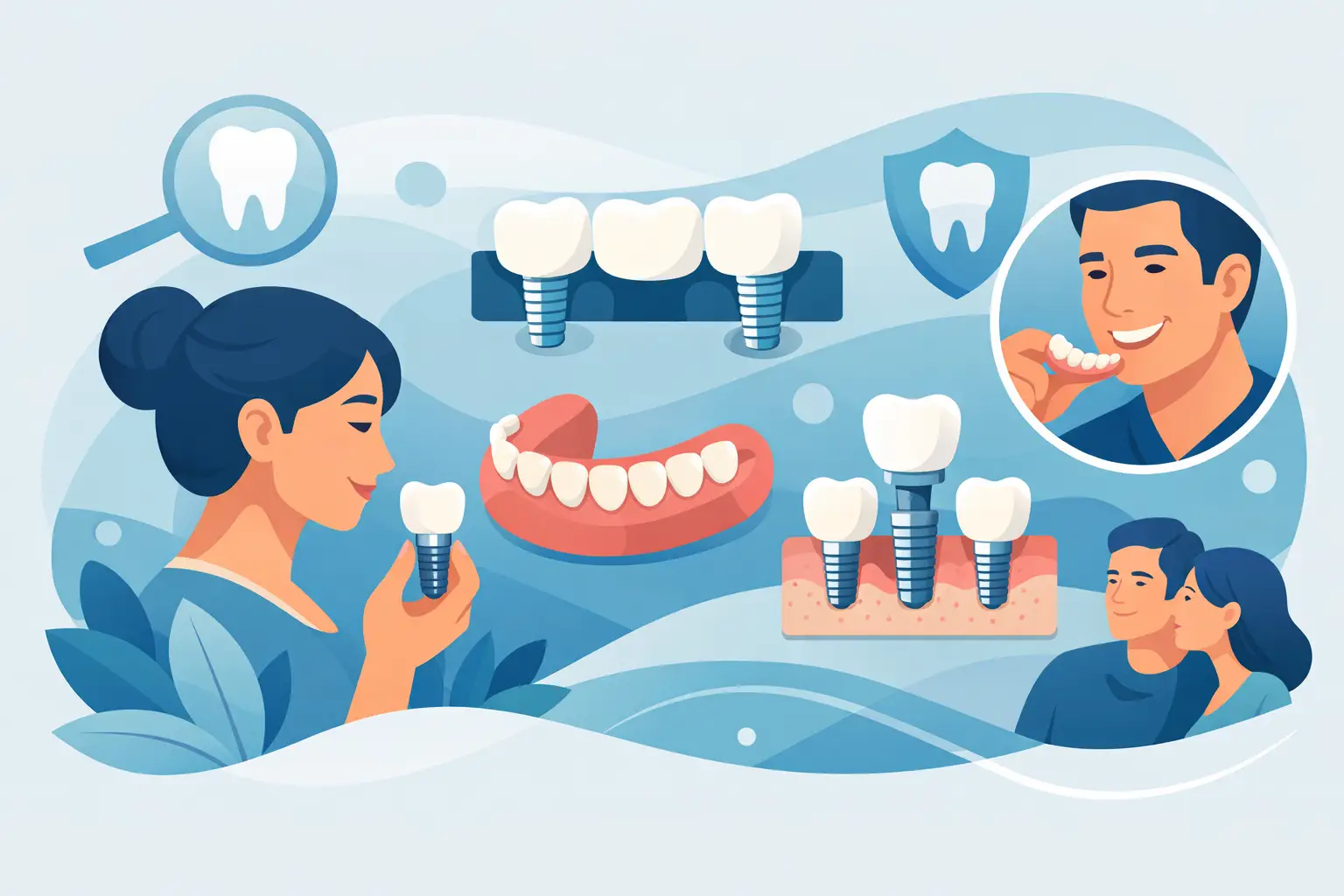
Losing a tooth changes more than your smile. It can affect how you chew, how clearly you speak, and how confident you feel when you laugh or meet someone new. The good news is that modern tooth replacement options can restore both function and appearance, and the right choice depends on your health, goals, timeline, and budget.
For some patients, the main concern is getting back to normal meals without discomfort. For others, it is closing a visible gap in a way that feels natural and lasts. There is no single answer that works for everyone, which is why it helps to understand how each option works before making a decision.
Why replacing a missing tooth matters
When a tooth is missing, the space does not always stay quiet. Neighboring teeth can begin to shift, the opposing tooth may move out of position, and the jawbone in that area can gradually shrink over time. Those changes can affect your bite and make future treatment more involved.
There is also the day-to-day side of it. A missing molar may make chewing uneven. A missing front tooth can change speech and self-confidence. Replacing the tooth is not only about appearance. In many cases, it supports long-term oral health and helps preserve the way your teeth work together.
Common tooth replacement options
Most patients will hear about three main tooth replacement options: dental implants, bridges, and dentures. Each has advantages, and each comes with trade-offs.
Dental implants
A dental implant replaces the root of a missing tooth with a small titanium post placed in the jawbone. After healing, a custom crown is attached on top to complete the restoration. If you are missing several teeth, implants can also support bridges or dentures.
Implants are often considered the closest replacement to a natural tooth. They are stable, do not rely on neighboring teeth for support, and can help preserve bone in the jaw. Many patients like that implants feel secure when eating and speaking.
That said, implants are not the fastest option. They usually require a healing period, and some patients may need bone grafting before placement if there has already been significant bone loss. They also tend to have a higher upfront cost than other treatments, though many people see value in their durability and function over time.
Dental bridges
A bridge fills the space left by one or more missing teeth by anchoring an artificial tooth to the teeth on either side. In a traditional bridge, those neighboring teeth are prepared to hold crowns that support the replacement tooth between them.
Bridges can be a strong choice when the teeth next to the gap already need crowns or have large restorations. Treatment time is often shorter than with implants, and patients usually appreciate that the result is fixed in place rather than removable.
The trade-off is that a bridge depends on adjacent teeth for support. If those teeth are healthy and untouched, preparing them may not be ideal. A bridge also does not replace the tooth root, so it does not provide the same bone-preserving benefit as an implant.
Partial and full dentures
Dentures are removable appliances used to replace multiple missing teeth or a full arch of teeth. Partial dentures fit around remaining natural teeth, while full dentures replace all teeth in the upper or lower arch.
For patients missing several teeth, dentures are often the most affordable way to restore appearance and basic function. They can also be made relatively quickly compared with some other treatments. Modern dentures can look more natural and fit more comfortably than many people expect.
Still, removable dentures may take time to get used to. They can shift during eating or speaking, and over time the changing shape of the jaw may affect fit. Full dentures also do not stop bone loss in the way implants can. For that reason, some patients eventually move from traditional dentures to implant-supported dentures for more stability.
How to choose between tooth replacement options
The best treatment usually comes down to a few practical questions.
How many teeth are missing?
If you are missing one tooth, an implant or bridge is often considered first. If you are missing several teeth in different areas, partial dentures or implant-supported solutions may make more sense. If all or most teeth in an arch are missing, full dentures or implant-retained dentures may be the better fit.
What is the condition of the surrounding teeth?
This matters more than many patients realize. If the teeth next to the missing tooth are healthy, preserving them may point toward an implant. If those neighboring teeth already have large fillings, cracks, or crowns, a bridge might solve more than one issue at once.
Is bone support adequate?
Implants require enough healthy jawbone for support. If a tooth has been missing for a long time, bone loss may have already occurred. That does not always rule out implants, but it can change the timeline and may add procedures such as grafting.
What is your timeline?
Some patients want the most long-term solution even if it takes longer. Others need to restore the space sooner for work, comfort, or budget reasons. A bridge or denture may be completed more quickly, while implant treatment often happens in stages.
What is your budget?
Cost is a real part of treatment planning, and it is better to discuss it early than avoid it. Implants often cost more upfront but may offer the most natural function and longevity. Bridges and dentures can be more accessible initially, though they may need replacement or adjustment over time. The right value is not always the lowest first price. It is the option that fits your needs and remains manageable for you.
Appearance, comfort, and daily life
Most patients are not thinking only in clinical terms. They want to know what everyday life will feel like after treatment.
Implants generally offer the most tooth-like feel because they are fixed in place and supported by the jaw. Bridges also feel secure and natural for many patients. Dentures can restore a smile very effectively, but comfort and confidence often depend on fit, oral anatomy, and whether the denture is traditional or implant-supported.
Eating is another major factor. Softer foods may be easier at first with any new restoration, but fixed options usually provide more bite confidence over time. Speech can also improve once missing teeth are replaced, especially in visible front areas where tooth position matters.
A full-mouth perspective matters
Choosing among tooth replacement options should not happen in isolation. Your bite, gum health, cavity risk, appearance goals, and long-term dental history all play a role. Sometimes the best answer is not a single treatment, but a combination.
For example, a patient may replace one missing tooth with an implant while also addressing crowding, worn teeth, or gum concerns elsewhere in the mouth. In a comprehensive office, that kind of planning is easier because treatment can be coordinated around the whole picture rather than one tooth at a time.
For families and adults in Northern Utah, that can make care more convenient. A practice like Bountiful Dentistry can evaluate whether you need a straightforward replacement, a more advanced restorative plan, or a solution that also supports cosmetic or orthodontic goals.
Questions worth asking at your consultation
A good consultation should feel clear, not rushed. You should understand what your choices are, why a dentist is recommending one option over another, and what to expect from treatment.
Ask how long the option typically lasts, how it will affect nearby teeth, what kind of maintenance is required, and whether your gums and bone are healthy enough for the solution you want. It is also reasonable to ask what happens if you wait. Sometimes a short delay is fine. In other cases, postponing treatment can narrow your options later.
You may also want to ask how your restoration will look compared with your natural teeth. Shade, shape, and fit matter, especially in visible areas. A strong plan should restore health and function without losing sight of appearance.
Replacing a missing tooth is not just about filling space. It is about choosing a solution that supports your bite, your confidence, and your long-term oral health. The right path is the one that makes sense for your mouth and your life, and a thoughtful conversation with your dental team is often the best place to begin.