A small chip on a front tooth can feel much bigger than it looks. For many patients weighing veneers vs bonding, the real question is not which treatment sounds better on paper - it is which one makes sense for your smile, your budget, and how long you want the results to last.
Both options can improve the look of teeth that are chipped, worn, uneven, stained, or slightly misshapen. Both are common cosmetic treatments. But they work differently, last different lengths of time, and fit different goals. If you are deciding between them, it helps to look beyond the before-and-after photos and understand what each treatment is actually designed to do.
Veneers vs bonding: the main difference
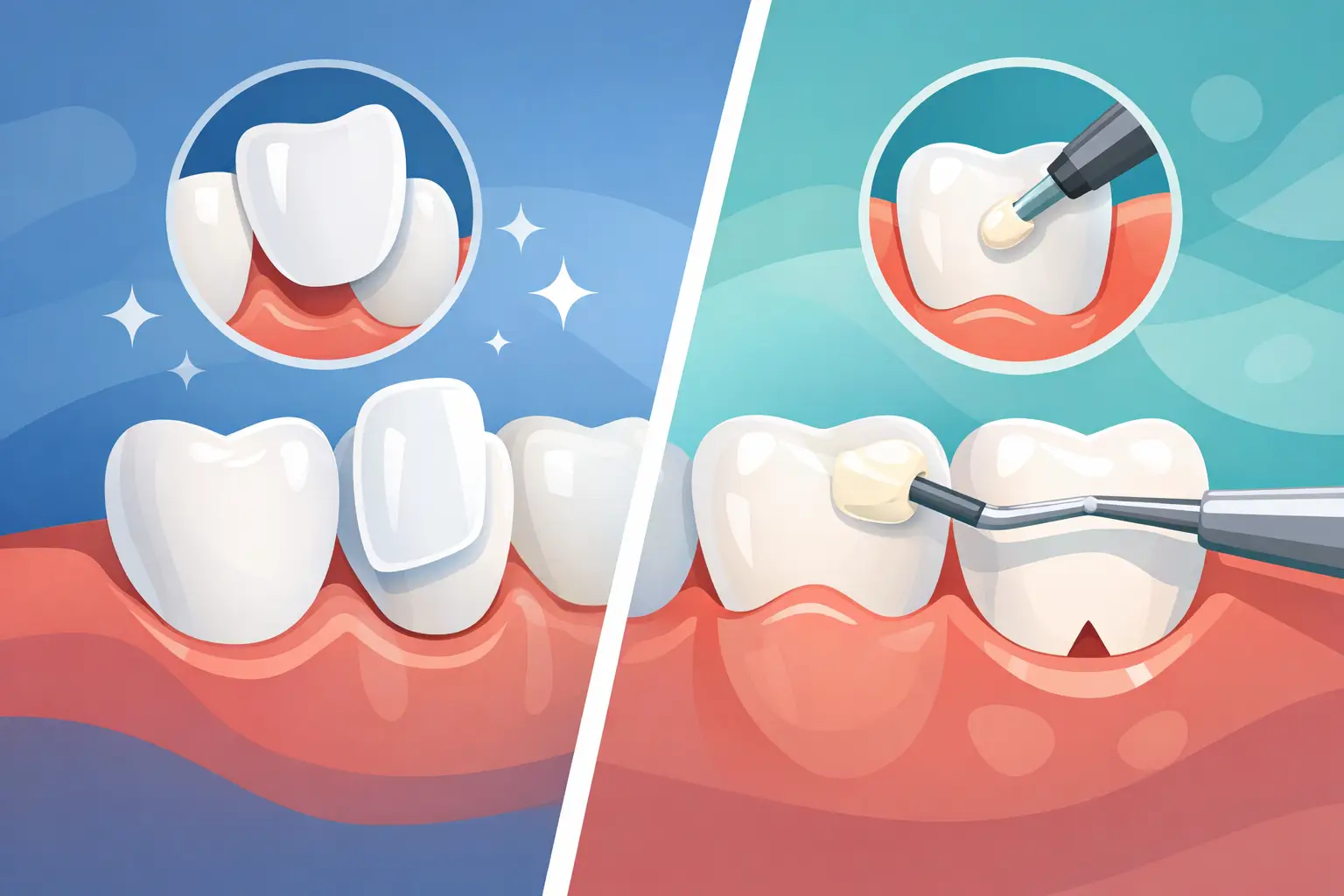
Dental bonding uses a tooth-colored resin that is shaped directly onto the tooth. Your dentist applies the material, sculpts it to improve the tooth’s appearance, hardens it with a curing light, and polishes it to blend in with the surrounding enamel. It is a conservative treatment and often requires little to no removal of natural tooth structure.
Veneers are thin shells, usually made of porcelain, that are custom created to cover the front surface of the tooth. They are bonded in place after the tooth has been carefully prepared. Veneers are more customized in shape, color, and translucency, and they are typically used when a patient wants a more significant or longer-lasting cosmetic change.
That difference matters because bonding is often best for smaller corrections, while veneers are often chosen for broader smile improvements.
When bonding makes more sense
Bonding is often a strong option when the issue is limited to one or two teeth. A small chip, a minor gap, an edge that looks uneven, or a tooth with slight discoloration can often be improved quickly with bonding. In many cases, treatment can be completed in one visit.
Patients also tend to like bonding because it is usually more affordable upfront than veneers. If you want a cosmetic improvement without a bigger investment, bonding can be a practical place to start. It can also be a good fit for younger patients or anyone who is not ready to commit to a more involved cosmetic procedure.
Another benefit is that bonding is conservative. Because less natural enamel may need to be removed, the treatment process is simpler. If your tooth is healthy overall and only needs a modest cosmetic fix, this approach may be enough.
The trade-off is durability. Bonding material is not as strong or stain-resistant as porcelain. It can chip, wear down, or pick up discoloration over time, especially if you drink coffee, tea, or red wine regularly, or if you bite your nails or chew on ice.
When veneers are the better choice
Veneers are often the better fit when a patient wants a more dramatic or more polished cosmetic result. They can correct multiple concerns at once, including stubborn discoloration, worn teeth, irregular shape, mild spacing issues, and a smile that looks uneven overall.
Porcelain veneers are known for looking natural because they reflect light in a way that is similar to enamel. They also resist stains better than bonding. For patients who want a bright, even smile that holds its appearance well over time, veneers can offer a more predictable long-term result.
Veneers may also make sense if bonding has already been placed on a tooth several times and keeps needing repair. At some point, repeated touch-ups can become less efficient than choosing a treatment with greater longevity.
That said, veneers are not the right choice for everyone. They usually require more planning, more investment, and some enamel removal. Because of that, they are best chosen carefully and with a clear idea of the final result you want.
Veneers vs bonding for appearance
If your top priority is appearance, both treatments can look very good when done well. The difference often comes down to how much change you want.
Bonding can blend beautifully into a natural tooth, especially for small repairs. If one front tooth has a tiny chip or slight shape issue, bonding may be all you need. It can be subtle and effective.
Veneers offer more control. Because they are designed in advance, your dentist can refine the size, contour, symmetry, and shade more precisely. That can be especially helpful if several front teeth need improvement and you want a more uniform look.
This is where expectations matter. If you are looking for a minor correction that no one notices as dental work, bonding may be enough. If you want a fuller smile makeover with more consistency across visible teeth, veneers often provide that level of refinement.
Durability and maintenance
One of the biggest practical differences in veneers vs bonding is how each option holds up over time.
Bonding generally does not last as long as porcelain veneers. While exact timing varies from person to person, bonding may need polishing, repair, or replacement sooner, especially on front teeth that absorb a lot of daily wear. Habits such as clenching, grinding, chewing pens, or opening packages with your teeth can shorten its lifespan.
Veneers are typically more durable and more resistant to everyday staining. They still need good care, but they tend to hold their shape and finish better over the years. That makes them appealing for patients who want a cosmetic treatment that stays stable with routine maintenance.
Neither option is maintenance-free. You still need regular exams and cleanings, healthy gums, and daily brushing and flossing. Cosmetic work looks best when the underlying teeth and gums are healthy.
Cost matters, but so does value
For many patients, cost is part of the decision from the start. Bonding usually costs less initially, which makes it easier to choose when the correction is small and the budget is limited.
Veneers generally cost more because they involve custom lab work, more planning, and premium materials. But a higher upfront cost does not always mean it is the wrong choice. If veneers last longer and need fewer repairs, some patients feel they offer better value over time.
This is one of those situations where cheaper and better are not always the same thing. The right question is whether you want the most affordable fix today or the most durable cosmetic solution for the years ahead.
Who is a good candidate for each?
Good candidates for bonding usually have healthy teeth with small cosmetic flaws. The bite should be reasonably stable, and the patient should not have habits that place too much stress on the repaired tooth.
Good candidates for veneers usually want to improve the appearance of one or more front teeth in a more complete way. Teeth and gums should still be healthy, and any decay, gum disease, or bite problems should be addressed first.
If you grind your teeth, either treatment may need extra protection, such as a night guard. If a tooth is badly damaged or weakened, neither bonding nor veneers may be the best solution. In that case, a crown or another restorative treatment could be more appropriate.
That is why a cosmetic decision should still start with a health-focused exam. The best-looking treatment is only successful if it also fits the condition of your teeth.
How to decide between veneers and bonding
The decision usually comes down to four things: how much change you want, how long you want it to last, how much tooth structure should be preserved, and what budget feels realistic.
If you want a quick fix for a small flaw, bonding is often a very reasonable choice. If you want a broader, more durable smile enhancement with stronger stain resistance and more customization, veneers may be the better fit.
Many patients are surprised to learn that this is not always an either-or decision across the whole mouth. Sometimes one tooth benefits from bonding while others are better suited for veneers. A dentist who provides both cosmetic and general care can help you compare options in the context of your oral health, not just the cosmetic goal. At Bountiful Dentistry, that kind of planning is part of helping patients choose treatment that feels right both clinically and personally.
A smile improvement should not feel like guesswork. If you are comparing veneers vs bonding, the most useful next step is a conversation about your teeth as they are now, the result you want, and what level of treatment truly matches both. The best cosmetic choice is the one that looks natural, fits your life, and still feels like a good decision long after the appointment is over.