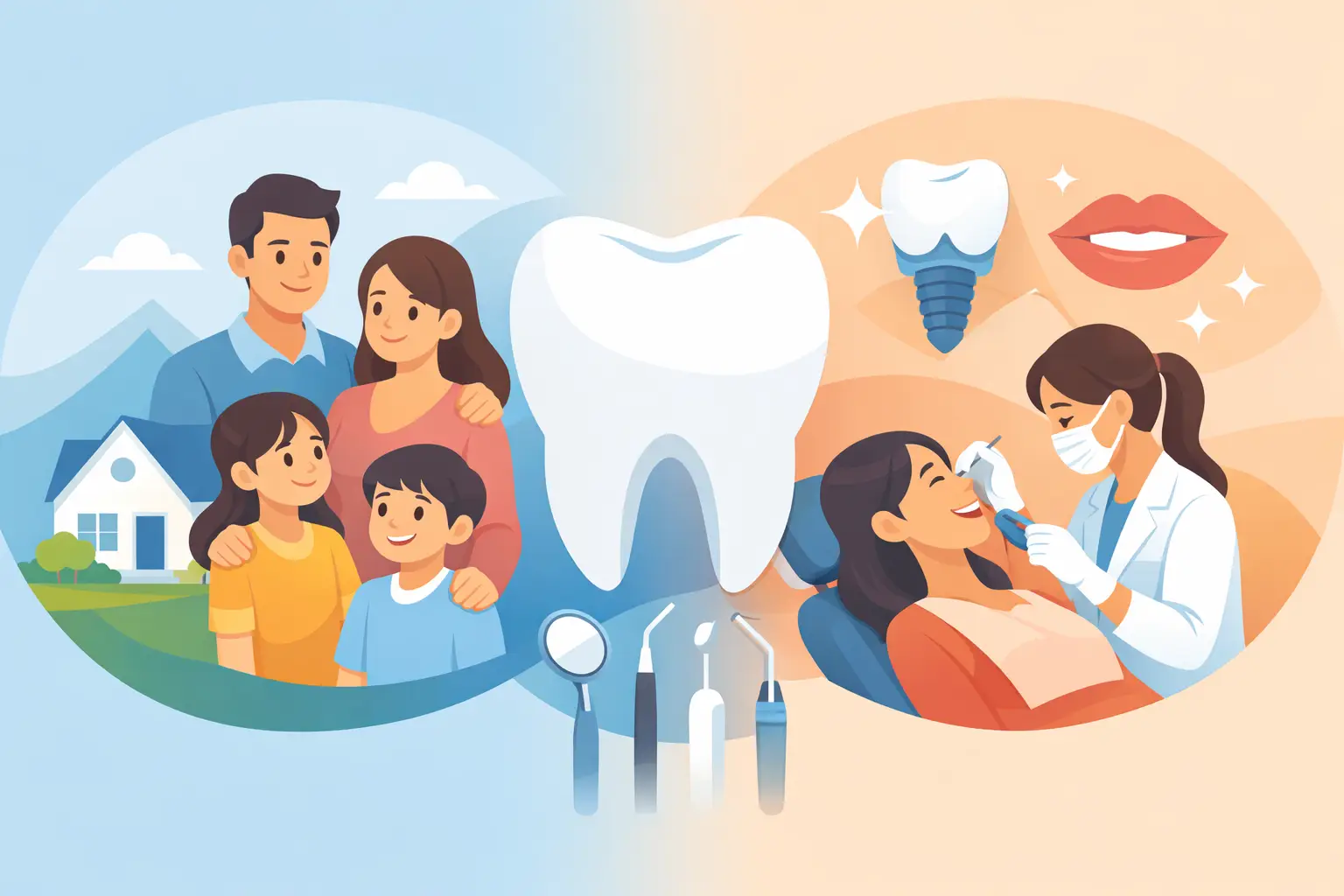
A lot of people start by asking a simple question: what is family and cosmetic dentistry? Usually, they are trying to solve a practical problem. They want a dentist who can handle routine checkups for the kids, help an adult with whitening or veneers, and maybe guide a parent through bigger needs like crowns, implants, or orthodontic treatment - without sending the family in three different directions.
That is the real value behind this type of care. Family and cosmetic dentistry brings together two important sides of oral health. One side focuses on prevention, routine treatment, and lifelong dental care for patients of different ages. The other focuses on improving the appearance of the smile, often in ways that also support comfort, function, and confidence.
What Is Family and Cosmetic Dentistry in Simple Terms?
Family dentistry is the part of care built around everyday oral health. It includes exams, cleanings, X-rays, fillings, gum care, and treatment planning for children, teens, adults, and older patients. The goal is continuity. A family dentist gets to know your dental history, tracks changes over time, and helps prevent small issues from becoming expensive ones.
Cosmetic dentistry focuses on how teeth and gums look. That can include whitening, veneers, bonding, tooth-colored restorations, and smile design treatments that improve shape, color, spacing, or symmetry. While cosmetic work is appearance-focused, it is not always only about looks. In many cases, it also improves bite balance, worn teeth, or damage that affects daily comfort.
When a practice offers both, patients get a broader range of care under one roof. That matters because dental needs rarely stay in one category. A chipped front tooth may need cosmetic improvement, but it also needs to be structurally sound. A teen who wants straighter teeth may also need preventive care and monitoring for long-term health. A parent interested in whitening may first need a cleaning or treatment for decay before cosmetic work makes sense.
Why Patients Look for Both in One Office
Convenience is the obvious reason, but it is not the only one. A practice that understands both family care and cosmetic goals can make better recommendations because it sees the full picture.
For example, a patient may come in asking about veneers when the real issue is uneven wear from bite problems. Someone else may want to replace a missing tooth for appearance, but the bigger concern is shifting teeth and bone loss. In those situations, good care starts with health and function, then builds toward aesthetics.
That integrated approach is especially helpful for families. Children need preventive habits and regular monitoring. Teens may need orthodontic guidance or help with sports-related tooth injuries. Adults often start thinking more about appearance, replacing old dental work, or addressing wear that has built up over time. Older adults may be managing missing teeth, gum health, and restorations that need updating. One dental home can make those transitions easier.
What Services Usually Fall Under Family Dentistry?
Family dentistry covers the care most people need on a regular basis. That includes professional cleanings, comprehensive exams, digital imaging, cavity treatment, sealants, fluoride, gum evaluations, and restorative work such as fillings and crowns. It may also include treatment for tooth pain, emergency visits, and monitoring for changes in bite or oral health.
The word family does not mean the office only treats children. It means the practice is equipped to care for patients across life stages. A younger child may need help getting comfortable in the chair and building positive habits. An adult may need a replacement crown or treatment for gum recession. A grandparent may need options for restoring missing teeth. The common thread is long-term care, not a narrow age range.
There is also a relationship component. When a dentist follows a patient or family over time, patterns become easier to spot. That can lead to earlier treatment, better planning, and less guesswork.
What Counts as Cosmetic Dentistry?
Cosmetic dentistry usually includes treatments that improve the visible appearance of the smile. Teeth whitening is one of the most common examples because it addresses discoloration quickly. Bonding can reshape small chips or close minor gaps. Veneers can change the size, shape, and color of front teeth for a more uniform look.
Tooth-colored crowns and fillings also fit into this conversation, even when they are partly restorative. If a tooth needs repair, most patients want that repair to blend naturally with the rest of the smile. Orthodontic treatment can also have a cosmetic effect, though it often does more than that by improving alignment and bite function.
The key point is that cosmetic treatment should be planned carefully. Not every patient needs the most dramatic option. Sometimes a cleaning, whitening, and a small repair create the result someone wants. Other times, a more comprehensive plan is worth it because it addresses several concerns at once.
Health and Appearance Are More Connected Than They Sound
People sometimes assume family dentistry is about health and cosmetic dentistry is about vanity. That is too simplistic.
A healthy smile tends to look better, and many appearance concerns are tied to underlying dental issues. Stains may be harmless, but cracks, worn edges, uneven teeth, and missing teeth often affect more than appearance. They can change how a person chews, speaks, or cleans around certain areas. Likewise, cosmetic improvements often last better when preventive care is strong.
This is why treatment planning matters. A good dentist does not jump straight to the most visible fix. They first look at the condition of the teeth, gums, bite, and bone support. If there is decay, gum inflammation, or instability, that usually needs attention before cosmetic work begins.
Is Family and Cosmetic Dentistry Right for You?
It depends on what you want from your dental care. If you prefer a single office that can handle regular visits while also helping with smile improvements, this model makes a lot of sense. It is especially useful for busy households, patients who want continuity, and adults who are thinking beyond basic cleanings.
It may also be the right fit if your needs overlap. Many people are not choosing between health care and cosmetic care. They need both. They want a dentist who can treat a cavity with a natural-looking filling, replace a damaged tooth in a way that restores confidence, or coordinate orthodontic and restorative treatment without losing sight of the big picture.
There are situations where referral to a specialist is still appropriate. Complex oral surgery, advanced gum treatment, or highly specialized cases may need a different provider. That is normal. Comprehensive care does not mean every service is identical in every office. It means your dentist can manage a wide range of needs and guide you well when outside expertise is the better option.
What to Expect From a Family and Cosmetic Dentistry Visit
A first visit usually starts with a conversation about goals as much as symptoms. If you are overdue for care, have a broken tooth, or want to improve your smile, those details help shape the exam. The dentist will look at oral health, existing restorations, gum condition, bite patterns, and any aesthetic concerns you mention.
From there, treatment is usually prioritized. Health issues come first if they threaten stability or comfort. After that, cosmetic options can be discussed in a realistic way. Some patients want the quickest improvement. Others want a phased plan that spreads treatment out over time. Neither approach is wrong. The best plan is the one that fits your health needs, budget, timeline, and expectations.
For families in Northern Utah, that kind of broad, practical care is often the reason to choose a full-service office like Bountiful Dentistry. It allows parents, teens, and adults to stay connected to one trusted team while addressing both routine dental health and visible smile goals.
How to Choose the Right Office
If you are comparing practices, look for one that communicates clearly about both preventive and cosmetic services. You want a team that can explain options in plain language, show how treatments connect, and avoid pushing cosmetic work before the basics are stable.
It also helps to choose a practice that thinks long term. The best dental decisions are rarely just about what looks good this month. They should support comfort, durability, and oral health years from now.
A smile can be healthier, stronger, and more attractive at the same time - and that is often where the best dentistry begins.